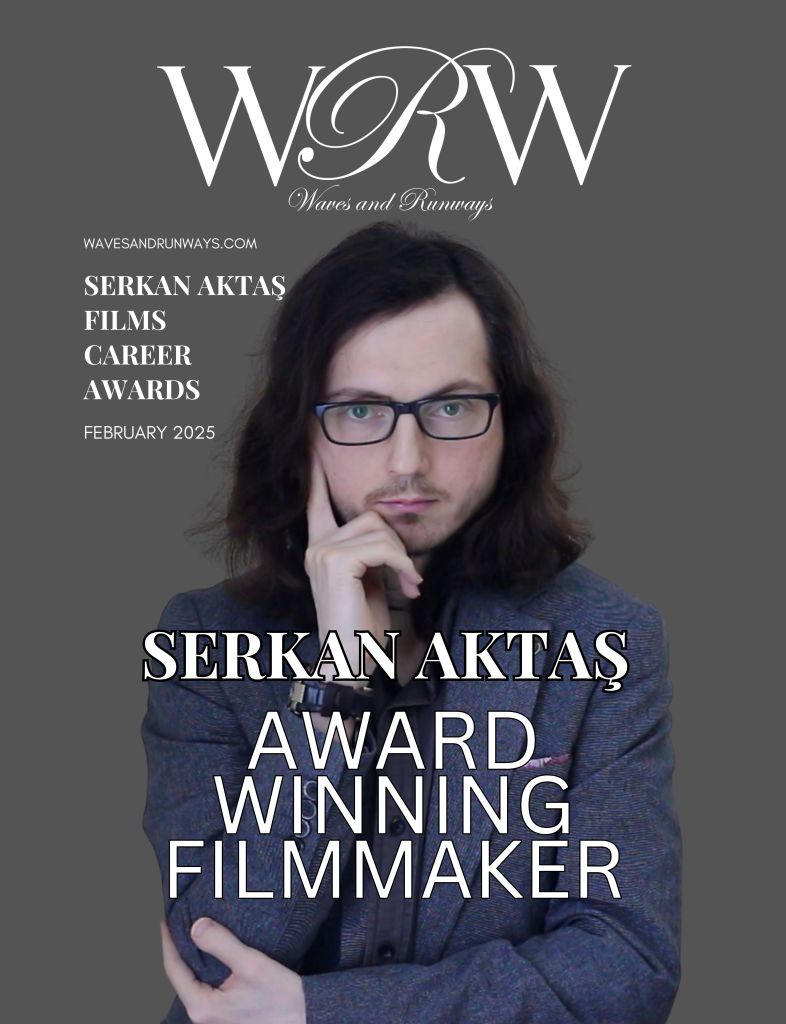
For Serkan Aktaş, filmmaking is more than just a career—it’s a way of unraveling the mysteries of existence. As Turkey’s most award-winning filmmaker, with 215 international accolades, Aktaş has spent his life blending intellect with creativity, building cinematic universes that explore humanity’s biggest questions.
Born with a dual fascination for logic and creativity, Aktaş’s path was set early. He studied Business Administration and Mathematics, earning degrees from Anadolu University and Dokuz Eylül University, before diving into film at Istanbul Cinema Academy. He also earned a Master’s and a Doctorate in Film and Television from Beykent University. But it’s his unique approach—rooted in abstract mathematics and philosophical exploration—that has defined his career. “What does it mean to be human? What lies beyond the limits of what we know?” These are the questions that drive his filmmaking, often explored through the fantastical realms of science fiction.
Films like The Librarian (2022), Resurrection Under the Ocean (2021), and Mirrorty (2017) are a testament to his ability to blend intellectual depth with cinematic artistry. His works transport audiences to worlds where science and imagination collide, leaving them with more questions than answers. Aktaş believes that the best films are the ones you can watch over and over again, discovering new layers with each viewing.
While he’s made a name for himself in the world of film, Aktaş is also an author, publishing works like The Librarian and Mirrorty in 2023. His books reflect the same intellectual curiosity and visionary storytelling that have earned him praise on the global film circuit.
But even with 215 awards to his name, Aktaş remains grounded. “I want people to experience the same joy and wonder that cinema brings me,” he says. This simple goal fuels his work, from short films to full-length features. His upcoming project, Kanlısırt – The Blood Ridge, promises to be yet another bold step in his journey to push the limits of what cinema can achieve.
For Aktaş, filmmaking isn’t just about entertainment—it’s about sparking reflection and challenging how we view the world. And with each new project, he continues to explore the boundaries between the known and the unknown, inviting his audience to join him on a journey of discovery.
In this exclusive interview, Serkan Aktaş shares insights into his creative process, the influences shaping his work, and his upcoming project, Kanlısırt – The Blood Ridge.
Waves and Runways: Your films delve into complex topics like abstract mathematics, fractals, and quantum mechanics. How do these subjects influence your filmmaking and the stories you tell?
S. A: My interest in abstract mathematics, fractals, and quantum mechanics shapes both the narrative and visual aspects of my films. I find fractals fascinating because they create infinite complexity from simple principles, which mirrors the layered storytelling I aim for in my work. In Resurrection Under the Ocean (2021), for example, I used the ocean and whale sounds to symbolize death and resurrection, with the repeating structures of fractals reflecting the protagonist’s spiritual transformation.
I’m also inspired by films like Groundhog Day (1993), where cyclical structures mirror fractals. These films show how abstract ideas—like time loops or altered realities—can be translated into compelling cinematic experiences. For me, abstract mathematics and quantum mechanics aren’t just academic subjects; they are essential to creating films that engage both the intellect and emotions, offering audiences a deep, immersive journey.
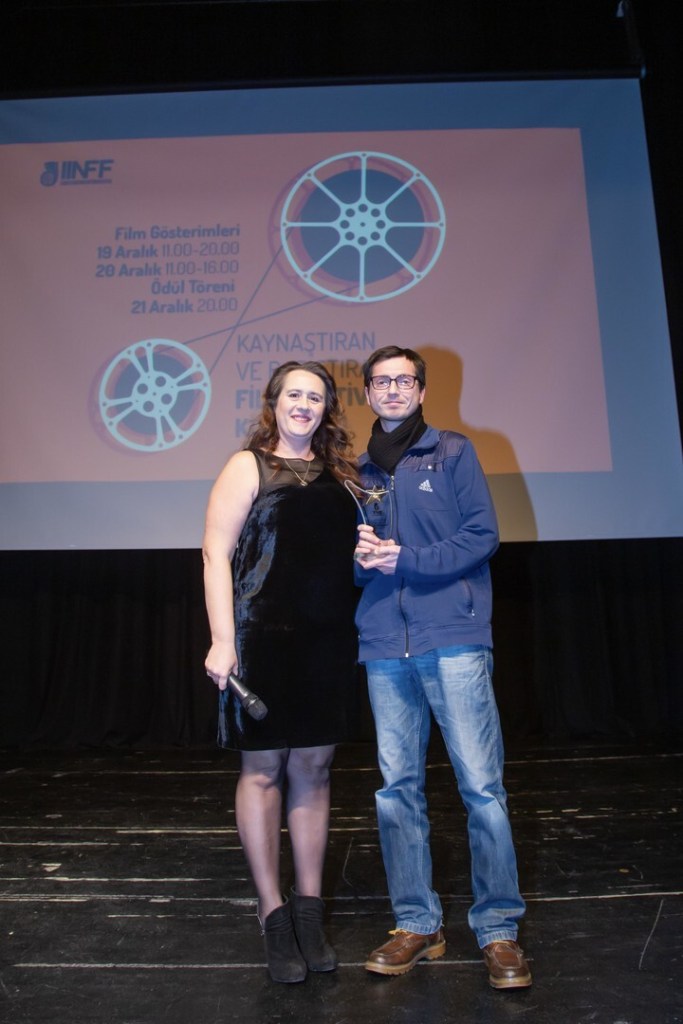
WRW: As the most awarded filmmaker in Turkey, what does success mean to you, and how do you stay grounded despite the recognition?
S. A: While I’m honored by the 215 awards, the real success for me lies in the ability to connect with audiences and touch their hearts. I want my films to resonate with people on a deep level, to make them feel the same wonder that cinema brings to me. Recognition is meaningful, but it’s the emotional connection with the viewer that drives me.
Success, for me, is also about contributing something valuable—whether it’s through exploring real-world issues or sparking fresh perspectives. I strive to create films that aren’t just entertaining, but thought-provoking.
I stay grounded by remembering that filmmaking is a continuous journey. To create films with lasting impact, I commit to reading, watching, and writing every day, constantly learning and evolving in my craft.
WRW: You’ve mentioned that the best film is one that can be watched over and over again. What do you think makes a film timeless?
S.A: A timeless film is one that resonates deeply, regardless of time, place, or audience. It’s more than just the plot or visuals—it’s about the emotions it evokes and the themes it explores. The best films have universal messages, complex characters, and timeless questions that speak to the human experience. A film that can be watched repeatedly offers new insights each time, whether it’s through its layered storytelling, its metaphorical depth, or the nuances in its performances. Groundhog Day is a perfect example of this. I’ve watched it over and over again, and each time, I uncover something new. On the surface, it’s a light-hearted comedy about a man stuck reliving the same day, but with each rewatch, you see how the protagonist shifts from cynicism to personal growth. The film’s depth and ability to offer fresh perspectives every time you watch it is what makes it timeless. I always strive to create films that provoke thought and spark conversation, films that leave room for reflection and connection. As I often say, “What does it mean to be human? How do we balance curiosity with caution? What lies beyond the limits of what we know?” These questions are the foundation of any timeless story—they invite the audience to look deeper, to question, and to grow alongside the film. In the end, the best movie is the one that continues to resonate long after the credits roll, something that speaks to both the head and the heart.
WRW: Your academic background in business, mathematics, and film is quite unique. How do these fields influence the way you approach filmmaking?
S.A: My academic background in Business Administration, Mathematics, and Film uniquely informs my approach to filmmaking. While it may seem like an unusual combination, each field has helped shape how I create films and tell stories. Business administration taught me to plan, manage resources, and think strategically, all of which are crucial when producing films, particularly independent projects where budgets and time are often limited. The ability to structure a project effectively, manage a team, and stay on track is something I learned early on, and it’s served me well in the film industry.
On the other hand, my education in Mathematics has a more direct influence on how I approach storytelling. Math encourages a structured, logical mindset, which is invaluable when it comes to constructing narratives with depth and complexity. I often integrate abstract mathematical concepts—such as fractals or chaos theory—into my films to create a sense of order within the chaos of imagination. This allows me to blend grounded, intellectual ideas with the fantastical worlds I build in my films, creating something that feels both deeply thoughtful and visually compelling.
Making this transition from analytical fields to a creative one was not without its challenges. The creative nature of cinema requires a different set of skills, one that balances technical knowledge with an artistic perspective. At first, merging these two worlds was challenging—combining abstract mathematical concepts with emotional storytelling or applying a business-like structure to the organic process of filmmaking. However, I have come to see the balance between logic and creativity as an asset, not a hindrance. This unique combination has allowed me to craft films that are intellectually stimulating while maintaining an emotional resonance, which I believe is what makes them stand out.
Ultimately, these fields have given me the tools to not only create art but to approach filmmaking as both an intellectual and emotional experience—crafting stories that have both depth and impact.
WRW: In your view, what role does fantasy and science fiction play in helping us explore real-world problems?
S.A: Fantasy and science fiction are powerful tools for exploring real-world issues. As a filmmaker with a background in mathematics, I see these genres as a natural extension of abstract thinking. Mathematics has always encouraged me to view problems from multiple perspectives, to think analytically and imaginatively. Fantasy and science fiction, at their core, also deal with abstract concepts—alternate realities, different dimensions, and futuristic technologies—making them the perfect canvas to address the complex problems we face today.
Through these genres, I strive to provoke thought and inspire change by reflecting the real-world struggles and challenges we encounter. For instance, in Mirrorty, I used the metaphor of “black mirrors” (smartphones, computers, TVs) to explore growing alienation in our technology-driven world. These “mirrors” reflect how our reliance on technology has led to societal isolation and emotional disconnection. By framing these ideas within a fantastical narrative, I can present complex issues—such as the emotional toll of digital culture and the loss of real human connection—while still creating an engaging, imaginative story.
Fantasy and science fiction are not just about escapism; they are, for me, a means to engage with urgent real-world problems in ways that challenge the audience to reflect, question, and find solutions. By merging my background in mathematics with these genres, I aim to offer new insights and invite conversations that extend beyond the screen, ultimately contributing to a broader understanding of the world around us.
WRW: What’s your creative process like when you’re developing a new project, and how do you stay inspired?
S.A: My creative process is built around a simple mantra: “Read every day, watch every day, write every day, and then make your movie.” The more input I absorb, the more meaningful the output becomes. I immerse myself in a wide range of sources—books, films, and abstract ideas—that fuel my imagination and help uncover themes for my projects.
Once inspiration strikes, I begin shaping the story, often using abstract concepts like mathematics to structure the narrative. I focus on creating a world that resonates emotionally and intellectually. Through continuous reflection and refinement, I ensure the project feels organic and alive. Staying inspired is about constantly learning, observing, and integrating new ideas into my work.
WRW: Your upcoming project, Kanlısırt – The Blood Ridge, is set during the Gallipoli campaign. What draws you to historical films, and how do you blend history with your style of filmmaking?
S.A: Historical films have always intrigued me because they allow me to explore deep human emotions and struggles within significant moments in time. With “Kanlısırt – The Blood Ridge,” I wanted to delve into the Gallipoli campaign during World War I, but not just as a historical retelling. Instead, I aim to merge historical context with powerful personal stories, exploring themes like guilt, redemption, and sacrifice.
For me, filmmaking is not just about recounting events but connecting them to universal emotional experiences. “Kanlısırt” is a deeply personal journey set against a historical backdrop—focusing on an individual’s internal battle for redemption, intertwined with the larger tragedy of war. This allows me to create a nuanced narrative that speaks to the emotional and societal struggles that resonate beyond the page of history.
The way I blend history with my filmmaking style is by focusing on cultural depth, integrating elements of Turkish heritage, and using dynamic visuals to create a sensory experience. A perfect example is the opening sequence of the film, which draws inspiration from iconic moments in cinema like The Godfather’s wedding scene. Here, we’ll weave Turkish folk dance into the story, making it more than just a scene—it becomes a visual metaphor, a microcosm of the film’s cultural and emotional essence.
Through this film, my goal is to showcase not just a war but a cultural journey, reflecting the richness of Turkish identity while inviting audiences to engage with the past in a meaningful and personal way. I hope Kanlısırt doesn’t just become another war film but an exploration of human nature and the complexities of redemption, seen through the lens of our shared history.
WRW: What do you hope audiences take away from your films, and what impact do you want to have on the world through your work?
S.A: I hope that audiences walk away from my films with a deeper sense of connection to both the world around them and their own inner selves. Cinema, for me, is a way to spark joy and wonder in others, the same way it does for me. I always strive to create films that resonate emotionally and intellectually, offering viewers something they can revisit time and time again. The best movie, in my view, is one that can be watched over and over, where each viewing uncovers something new—whether it’s a new interpretation, a deeper connection to a theme, or simply a new emotional layer.
Through my work, I aim to explore the big questions: What does it mean to be human? How do we balance curiosity with caution? What lies beyond the limits of what we know? These are the questions that drive my storytelling. But more than that, I want my films to contribute to real-world conversations. With my intellectual perspective as a filmmaker, I feel a responsibility to explore and contribute solutions to unsolved societal problems, or at least bring awareness to them through the stories I tell. Ultimately, I want to impact the world by helping people think more deeply about the human experience, connecting them to universal truths, and inspiring them to engage with the world around them in a more meaningful way.
In summary, Serkan Aktaş’s unique approach to filmmaking combines intellectual depth with emotional resonance. Through his exploration of complex themes, from the mysteries of human existence to the impact of societal change, his films not only entertain but also provoke thought and spark conversation. As a filmmaker with a background in business, mathematics, and film, Aktaş continuously strives to blend creativity with analytical precision, offering audiences films that invite reflection and connection. With projects like Kanlısırt – The Blood Ridge on the horizon, his journey in reshaping the cinematic world is far from over, and his commitment to pushing the boundaries of storytelling continues to inspire.
Stay connected and follow Serkan Aktaş’s evolving cinematic journey:
IMDB | LinkedIn | TMDB | Letterboxd | FilmFreeway | X | Vimeo | YouTube
 Waves and runways